A relatively unknown area of the deep blue sea, the open sea is under French jurisdiction up to 200 miles from the coast.
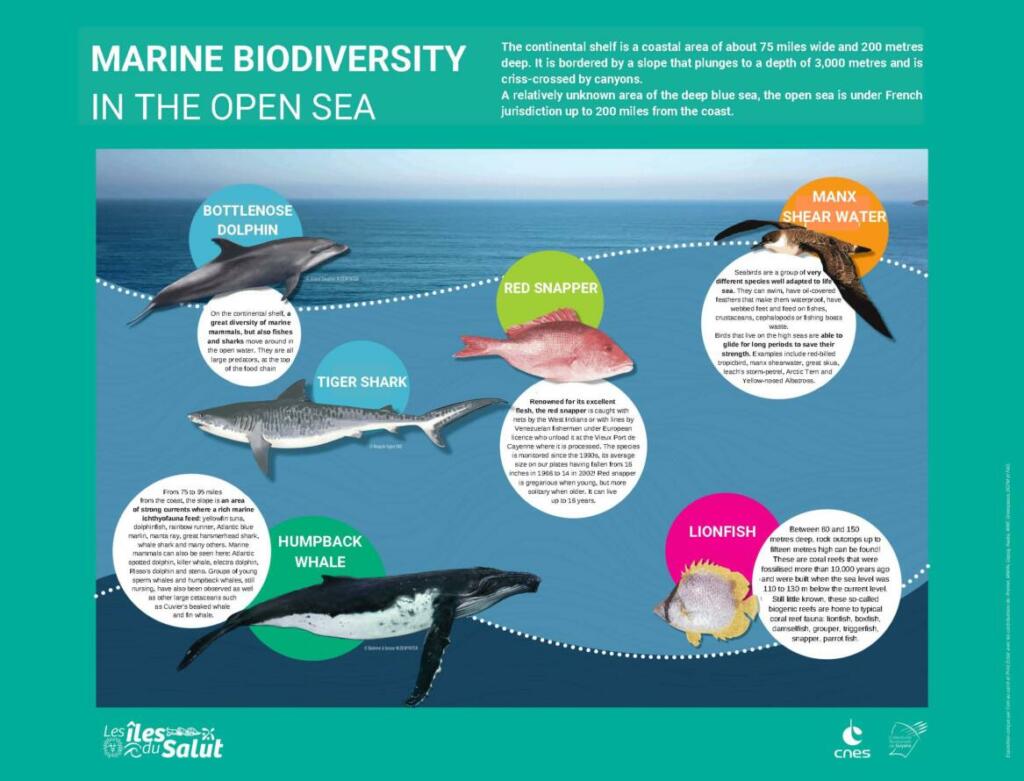
BOTTLENOSE DOLPHIN
TIGER SHARK
On the continental shelf, a great diversity of marine mammals, but also fishes and sharks move around in the open water. They are all large predators, at the top of the food chain
RED SNAPPER
Renowned for its excellent flesh, the red snapper is caught with nets by the West Indians or with lines by Venezuelan fishermen under European licence who unload it at the Vieux Port de Cayenne where it is processed. The species is monitored since the 1990s, its average size on our plates having fallen from 18 inches in 1988 to 14 in 2002! Red snapper is gregarious when young, but more solitary when older. It can live up to 18 years.
HUMPBACK WHALE
From 75 to 95 miles from the coast, the slope is an area of strong currents where a rich marine ichthyofauna feed: yellowfin tuna, dolphinfish, rainbow runner, Atlantic blue marlin, manta ray, great hammerhead shark, whale shark and many others. Marine mammals can also be seen here: Atlantic spotted dolphin, killer whale, electra dolphin, Risso’s dolphin and steno. Groups of young sperm whales and humpback whales, still nursing, have also been observed as well as other large cetaceans such as Cuvier’s beaked whale and fin whale.
LIONFISH
Between 80 and 150 metres deep, rock outcrops up to fifteen metres high can be found! These are coral reefs that were fossilised more than 10,000 years ago and were built when the sea level was 110 to 130 m below the current level. Still little known, these so-called biogenic reefs are home to typical coral reef fauna: lionfish, boxfish, damselfish, grouper, triggerfish, snapper, parrot fish.
Manx shearwater
Seabirds are a group of very different species well adapted to life at sea. They can swim, have oil-covered feathers that make them waterproof, have webbed feet and feed on fishes, crustaceans, cephalopods or fishing boats waste.
Birds that live on the high seas are able to glide for long periods to save their strength. Examples include red-billed tropicbird, manx shearwater, great skua, leach’s storm-petrel, Arctic Tern and Yellow-nosed Albatross.
Exhibition designed by Com au carré and Print Eclair with contributions from Ifremer, MNHN, Gepog, Kwata, WWF, Green